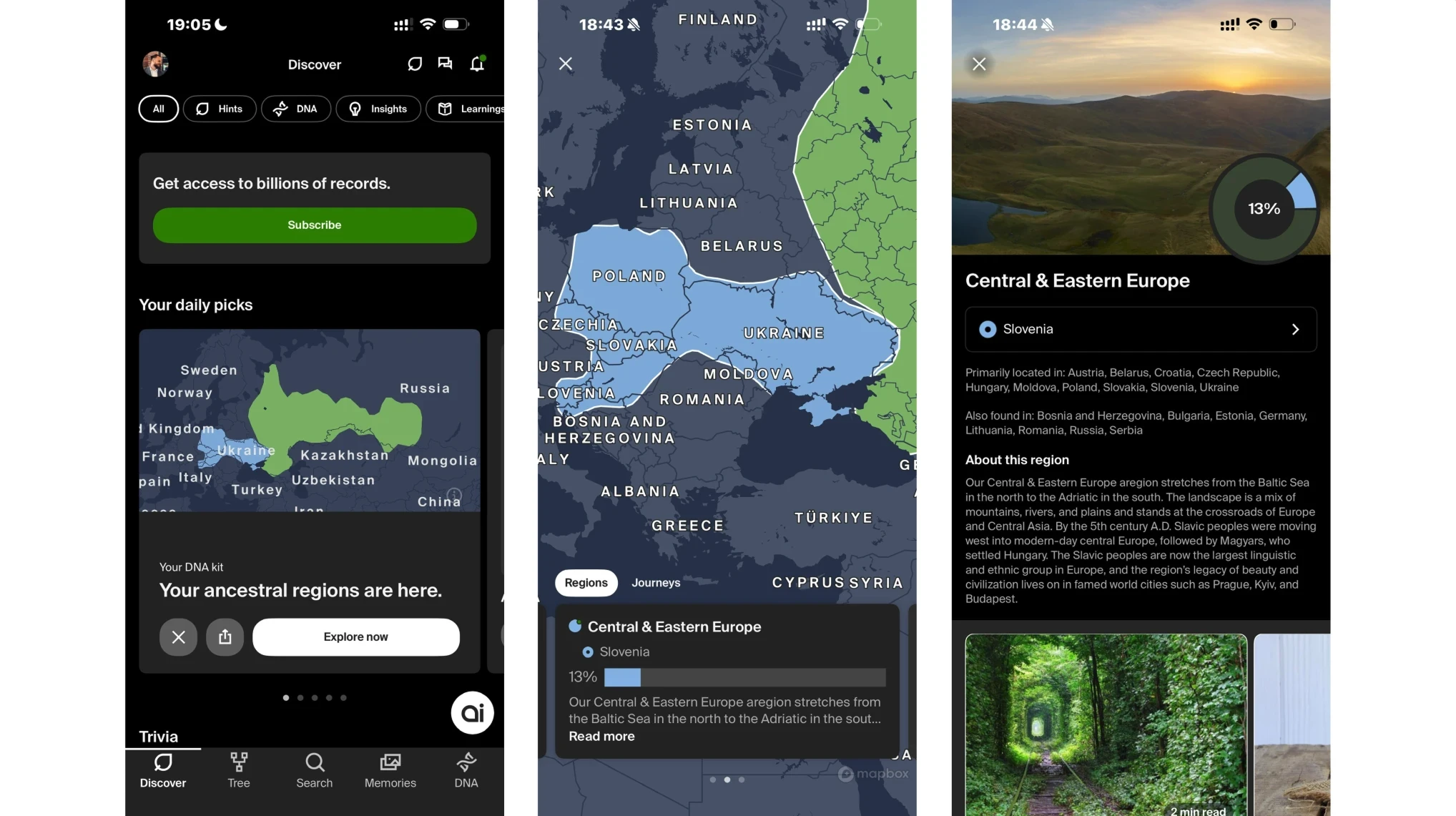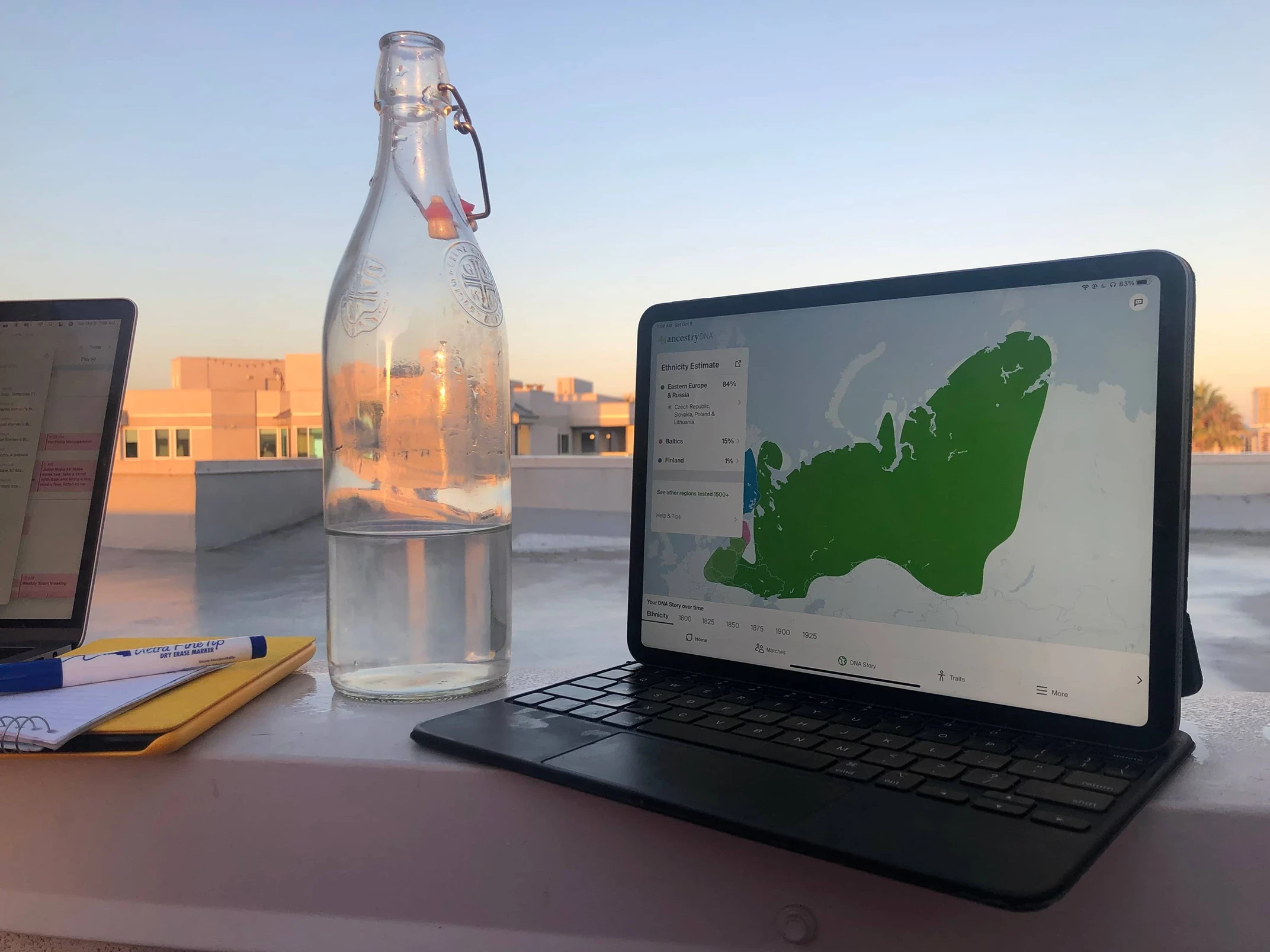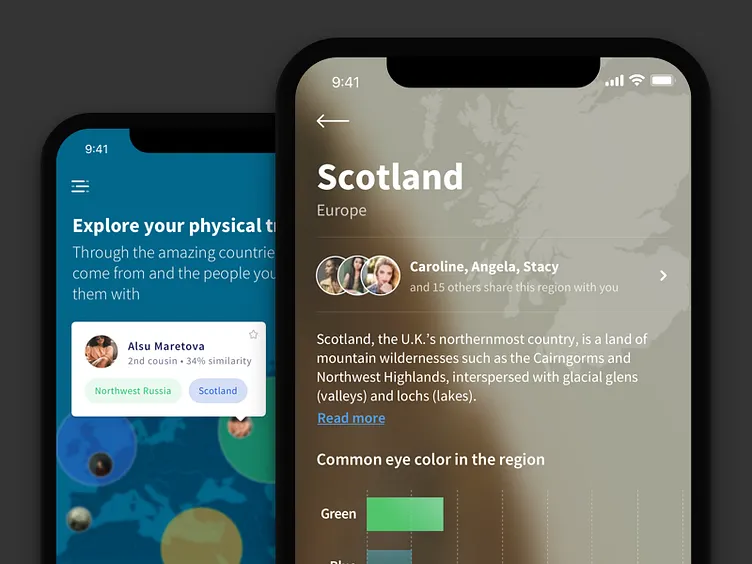
Ancestry built its category leadership on family history and records. But as consumer DNA testing matured, customers started expecting more: traits, wellness, and health insights that felt fun, useful, and scientifically grounded. We were brought in to help Ancestry strengthen its position in this new problem space – modernizing the DNA experience, making traits app feel truly worthwhile, and preparing the platform for a broader “personal discovery” vision.
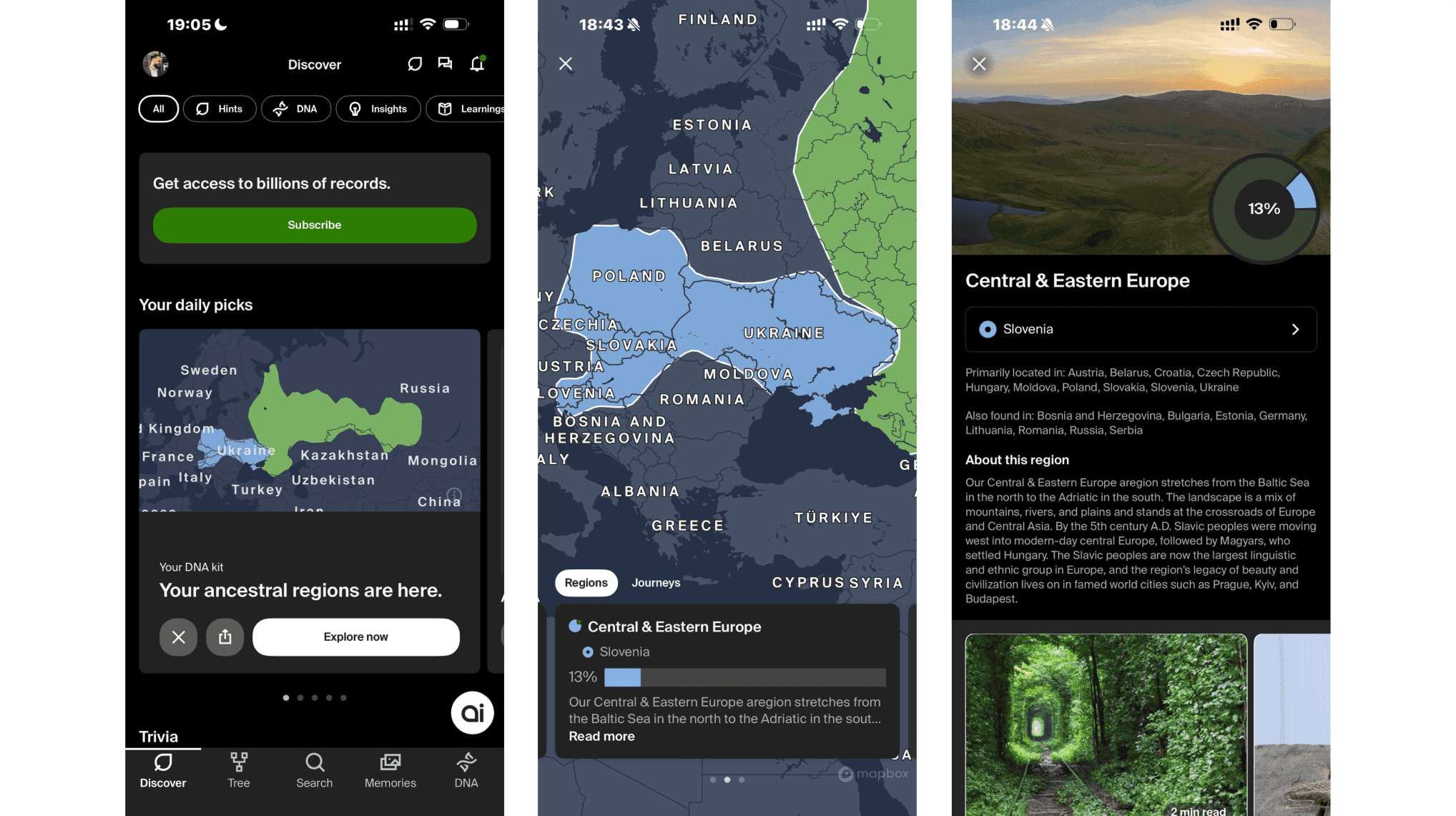
Direct-to-consumer DNA kits were no longer about a single question. Research showed that most people interested in testing wanted a mix of family history, traits, and health-related insights.
Ancestry’s strength in genealogy and brand awareness gave it a powerful starting point, but the core experience still leaned heavily on ethnicity estimates and record-based family history. To stay competitive and satisfy modern curiosity, DNA needed to tell richer, more personal stories.
Two persistent customer desires stood out:
Traits that connect back to family and origins
Genealogy enthusiasts wanted to see traits in the context of their family tree: Who might I have inherited this from?Traits as a way to compare and connect with living people
Younger, more social users wanted to see how they stacked up against relatives and friends, and to play with their results together.
Traits had the potential to bridge both needs—if they were positioned and designed correctly.
Market and competition
At the time, 23andMe was seen as the more modern, science-forward player, particularly attractive to younger users.
Ancestry held clear advantages: stronger brand awareness, deep reputation and content in family history, price strength in core genealogy offerings. But competitive analysis surfaced some key risks: 23andMe scored higher on ease of understanding, perceived scientific rigor, and actionable insights. Ancestry often lost on product breadth, especially when health and wellness were part of the consideration set. If 23andMe fully leaned into health, share-shift models showed a significant threat to Ancestry’s DNA business. A robust, engaging Traits experience represented an early-move opportunity: a way to claim emotional and scientific ground before health products reshaped the market.
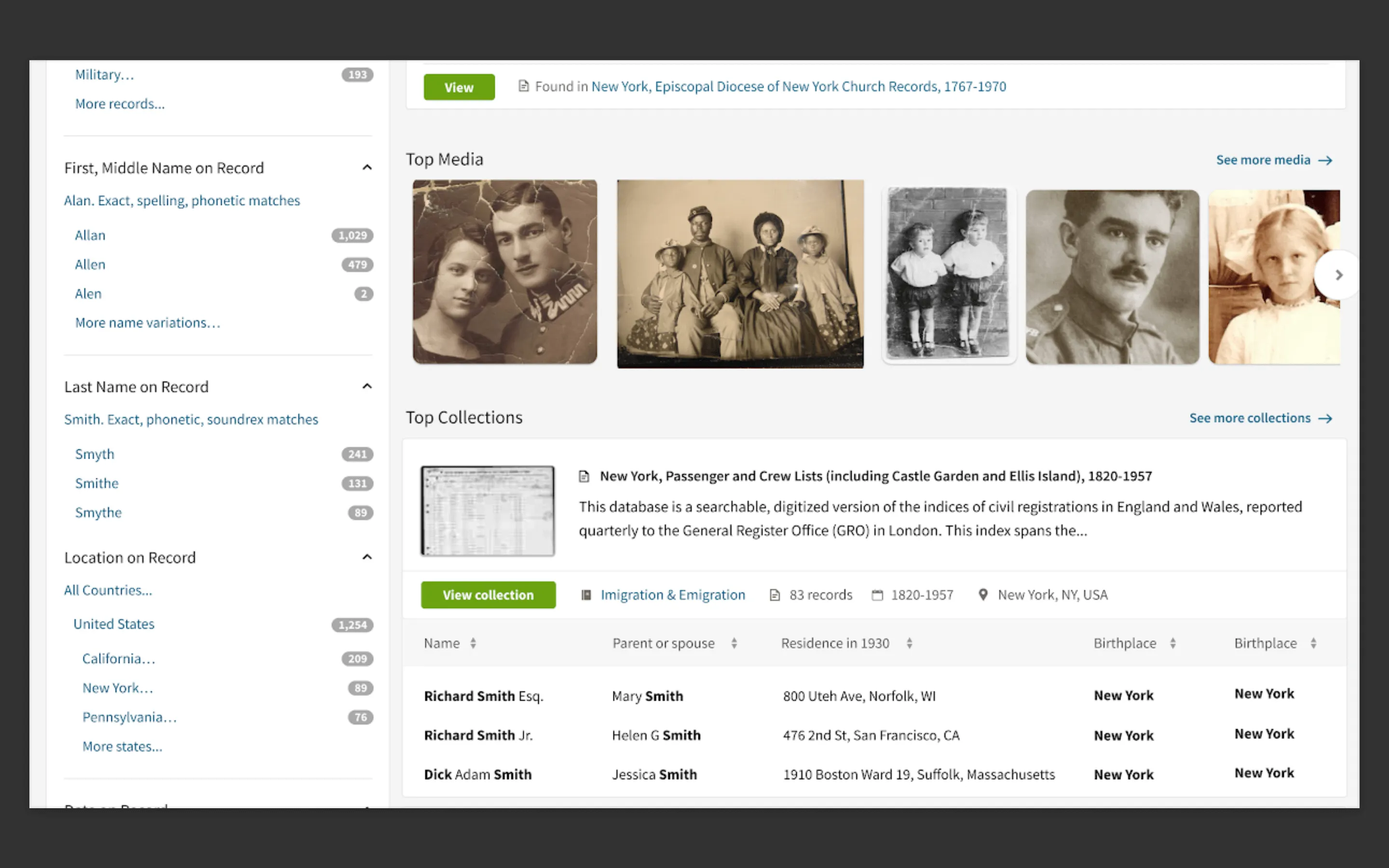
Internally, Ancestry was aware that parts of its platform still felt “old-school.” At the same time, leadership had set an ambitious direction: evolve into a “personal discovery company” by 2023.
That required two things at once:
Modern, engaging front-door experiences for new DNA customers (Traits, discovery, storytelling).
Structural improvements to legacy systems like search and family tree, which had high strategic value but lagging satisfaction.
Wigwham’s remit was to help on both fronts—starting with DNA Traits and extending into discovery and search strategy.
Wigwham partnered with Ancestry DNA over a multi-year period. Our work combined:
Product and UX strategy
Human-centered research and testing
Visual and interaction design for DNA Traits
Concept development for new discovery features
Strategic support on core search and platform positioning
We were not there just to “make things pretty.” The engagement was about clarifying where Ancestry needed to move in the market and designing concrete, shippable steps to get there.
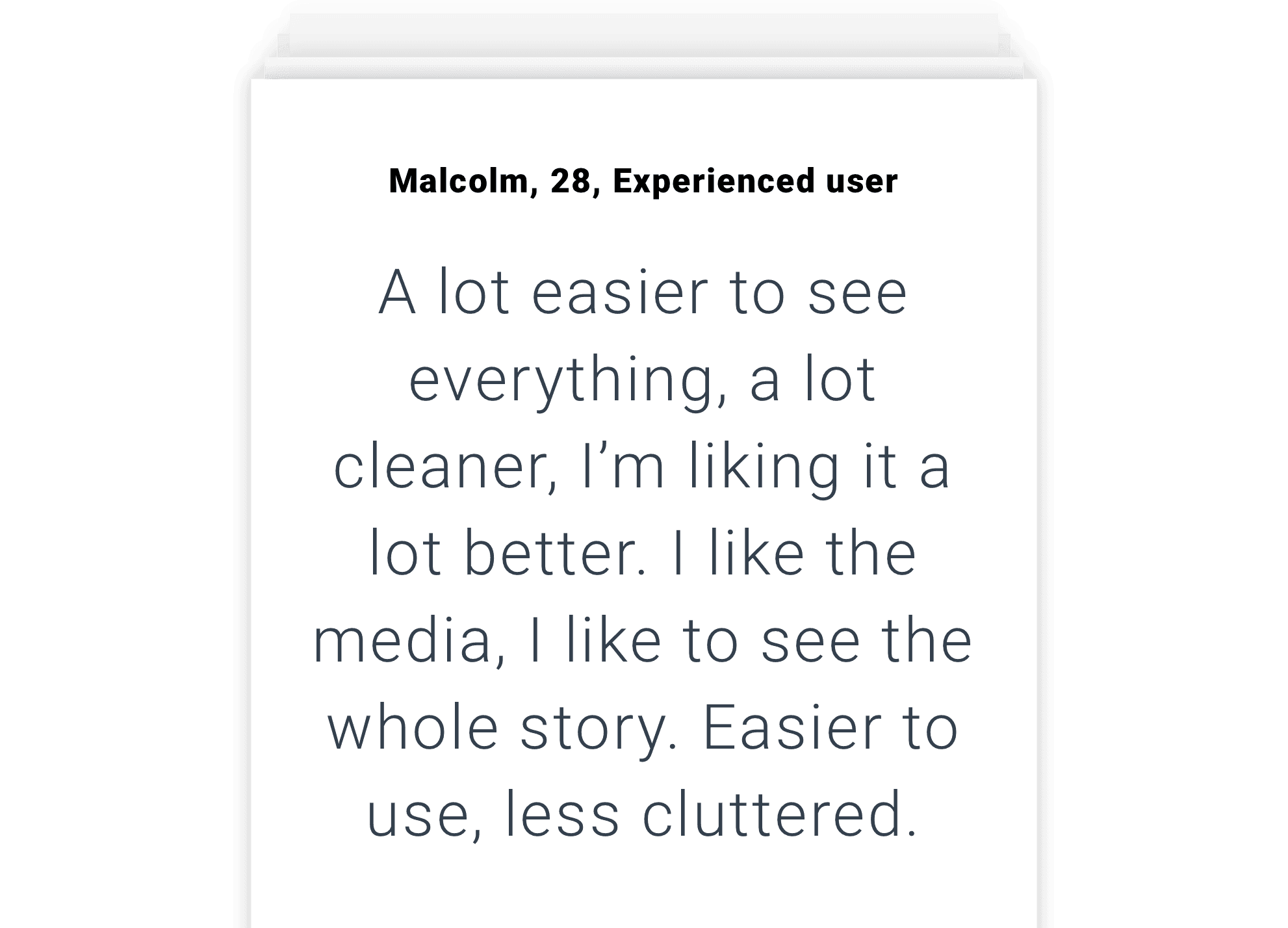
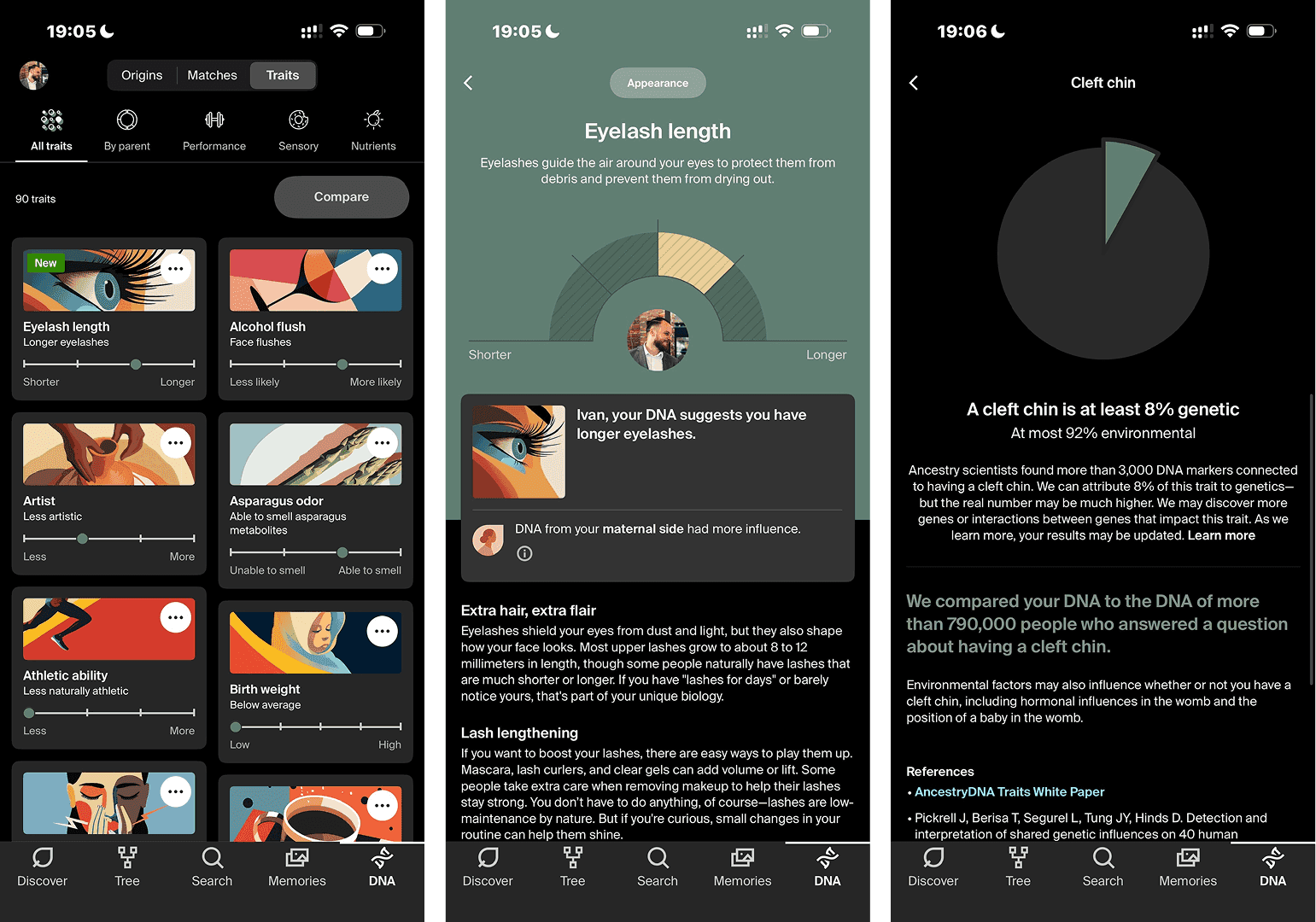
Visual language was only useful if it supported a clear product story. I collaborated with Ancestry’s internal teams to design the Traits product experience. Testing showed that the card-based layout struck the right balance: enough science to feel trustworthy, but organized in a way that didn’t overwhelm casual users.
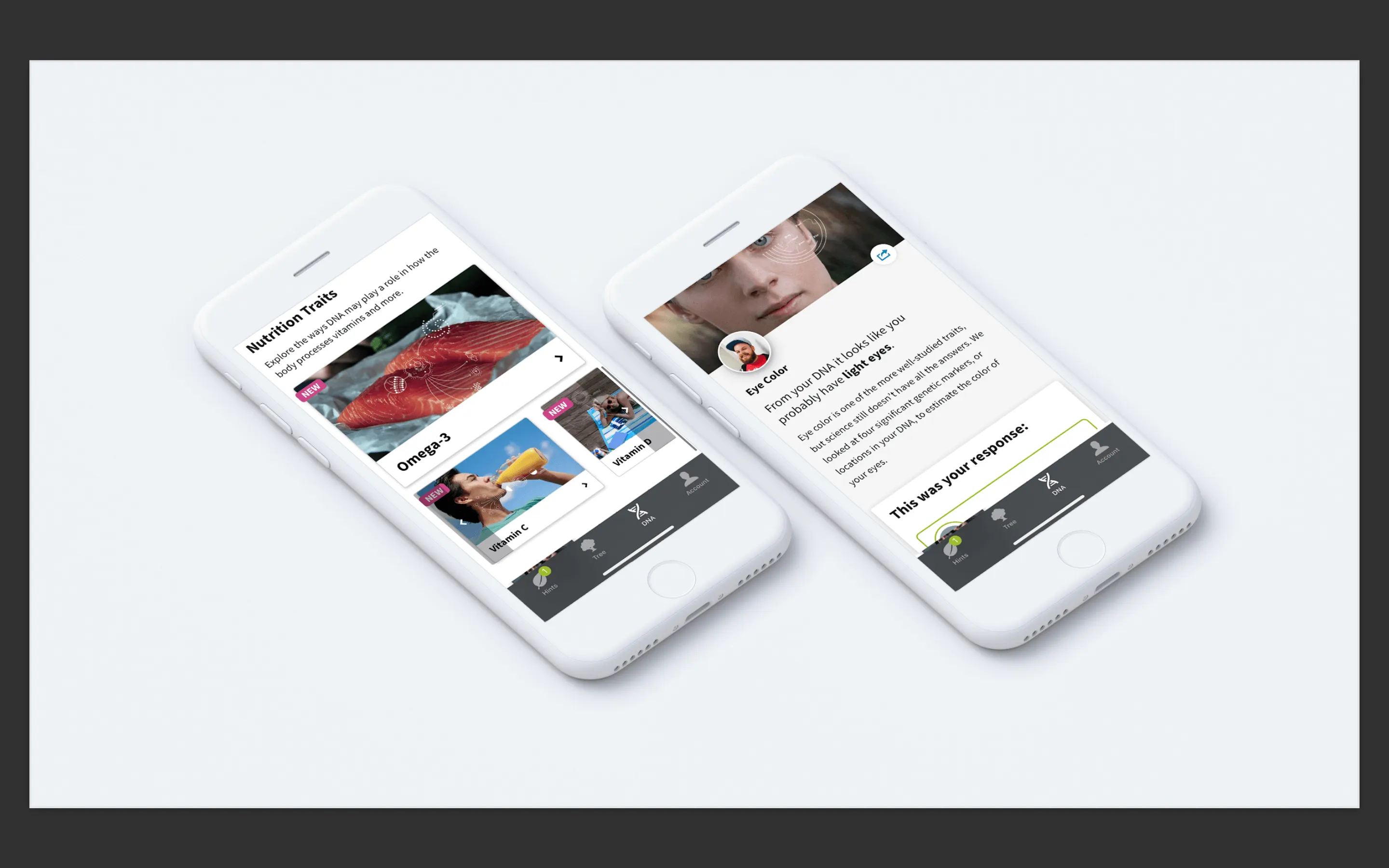
For wellness traits, the direction shifted toward photography with light scientific overlays (chemical structures, diagrams), balancing human warmth with a sense of rigor for topics like caffeine sensitivity, alcohol flush, bitter taste perception, B-12, Omega-3, and muscle performance.
I led the design direction for this system:
Defined a visual language that could flex from “hard science” to “everyday life” without losing credibility.
Developed illustration series for core traits (e.g., hair loss, earlobe type, eye and hair color, iris patterns, skin pigmentation).
Delivered production-ready artwork suitable for large, high-impact use on web and marketing surfaces.
Ancestry wanted to move toward illustrations that felt:
Modern and simple
Conceptual rather than literal
Confident in their use of minimal color
Following weeks of research, Traits product experience included:
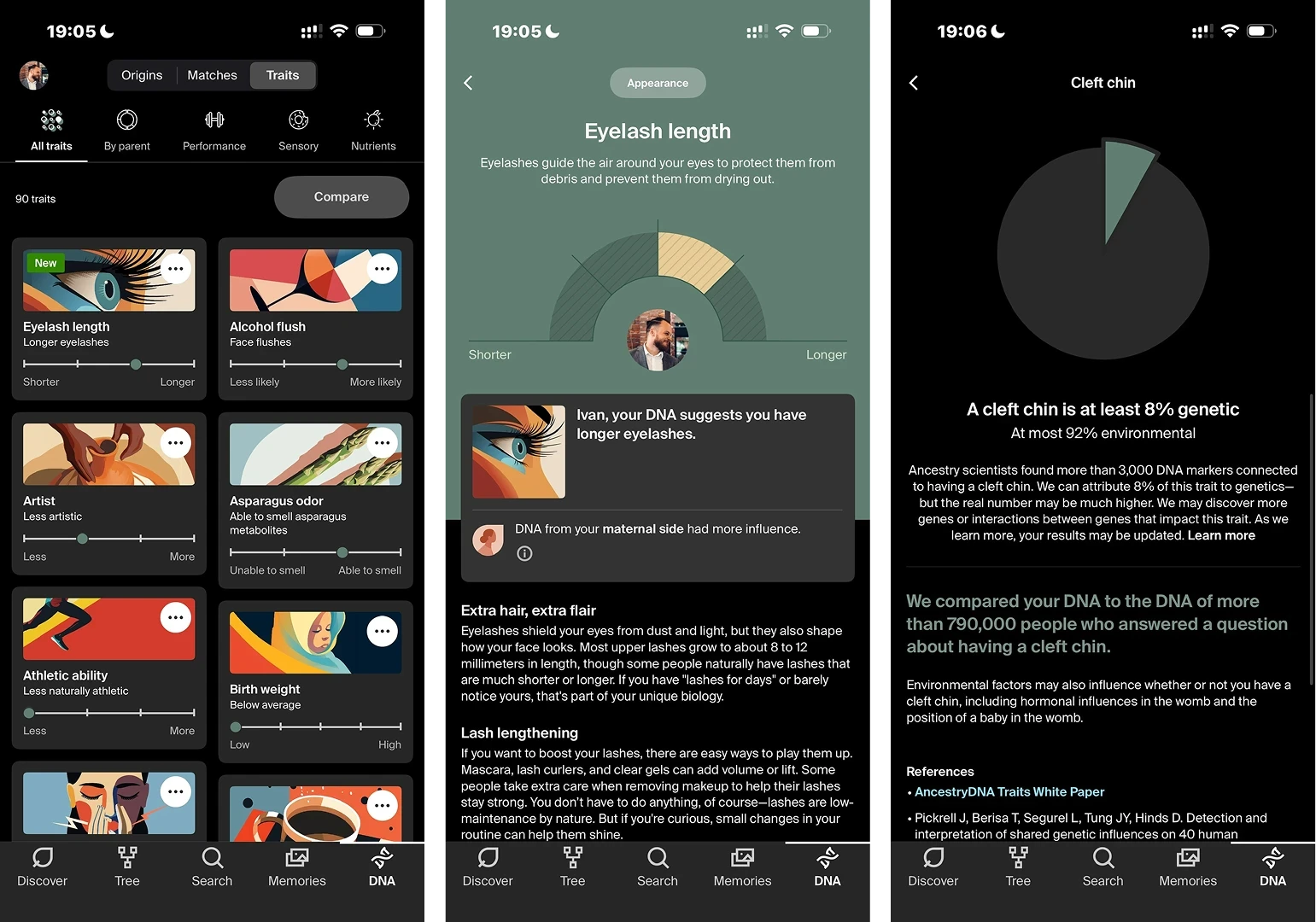
A high-level “Your Traits” overview, giving customers a quick, delightful sense of what their DNA revealed.
Individual trait detail pages explaining what a trait means, how it’s measured, and how common it is—broken into card-based snippets so users could skim or dive deeper.
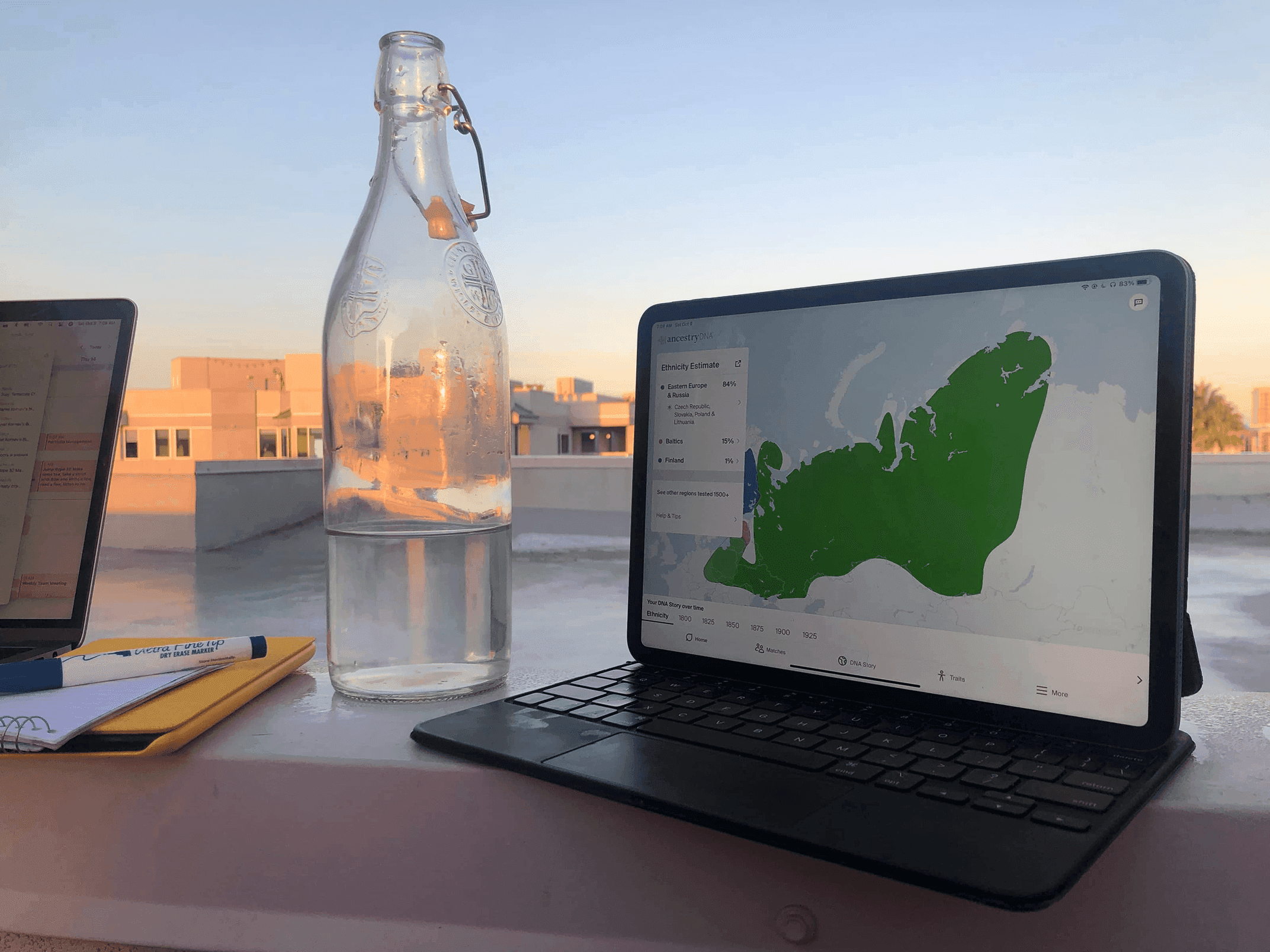
Research made it clear that Traits alone wouldn’t unlock the full opportunity. People wanted traits to feel anchored in family history and ancestry, shareable and socially meaningful with living relatives and friends.
To address this, I worked on two concept directions:
Bullseye – traits + genealogy
Bullseye explored the question: “Which ancestor might I have inherited this from?”
The concept connected trait results back into the family tree, using historical records and DNA matching to surface likely sources for a trait. The goal was to create “wow” moments where users saw science, history, and identity converge in a single view.
Tango — traits as social comparison
Tango looked at side-by-side comparison of traits and ethnicity with family, friends, and DNA matches. It was designed to be: Lightweight and fun for younger users A new social interaction surface on the site.
Testing showed strong interest in comparison itself, with some refinement needed around how “game-like” the experience should feel and how it was labeled. The concept helped Ancestry understand where and how social mechanics could add value without undermining trust.
Onboarding for families and clinicians
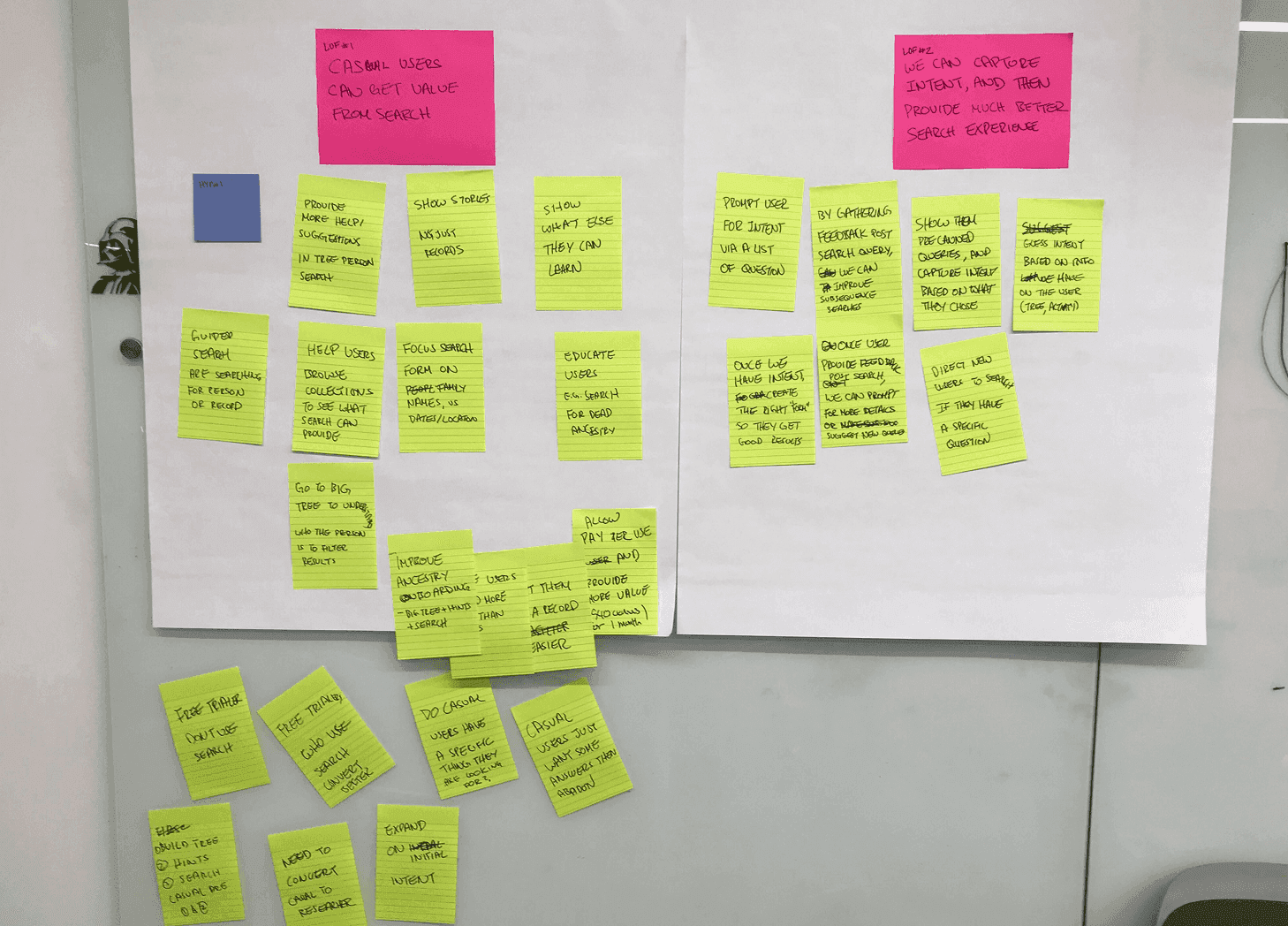
As the Traits work matured, Wigwham was also pulled into conversations about Ancestry’s core search and family tree experience, where satisfaction was lagging despite the product’s centrality. Our contributions here focused on framing the problem and direction, not replacing in-house domain expertise:
Helped articulate the shift from a record-centric search model (great for power users) to a person-centric discovery model expected by newer, mainstream customers.
Advised on bringing free-form search and smarter relevance into the experience, supported by data science, to reduce “false broad” results that frustrated users.
Collaborated with product teams on beta exit criteria and success metrics for Traits and related discovery surfaces—frequency of use, sharing behavior, satisfaction scores, and reach.
The goal was to ensure that new DNA experiences weren’t just visually modern, but also aligned with the deeper architectural changes Ancestry needed to make.
Outcome: a bridge to “personal discovery”
The combined effort – visual language, Traits product design, feature concepts like Bullseye and Tango, and strategic input into search and discovery—helped Ancestry:
Present DNA Traits as a modern, engaging experience rather than an add-on.
Speak more credibly to wellness-adjacent interests without over-promising on health.
Begin the shift from “records company” to “personal discovery company”, with DNA at the center of a broader, more human story.
Ancestry’s platform was like a trusted, historic family home. The foundations were strong, but the exterior read as dated next to the new glass condo down the street. My job wasn’t just to repaint the façade; it was to design a modern sunroom—Traits and discovery experiences that welcomed a new generation of visitors—while helping the owners plan the structural updates needed to support modern life inside.