Linggo is an Augmentative and Alternative Communication (AAC) platform that supports people who struggle to speak and the caregivers and clinicians around them. Conditions include autism, aphasia, traumatic brain injury, and a range of intellectual and developmental disabilities. The product’s mission is to make functional communication, language, and literacy more attainable for these users and their support networks. Wigwham Perception Labs was brought in to strengthen Linggo’s position in this space by clarifying the product story, improving critical journeys, and making its clinical value easier to see, use, and trust.
Almost 60% of AAC devices are abandoned within the first year of use. Families and clinicians often point to tools that are cognitively demanding, poorly supported, and not well-aligned with real-world therapy.
The need is especially acute in pediatric autism, where a large share of children are minimally vocal or non-vocal and depend on AAC to communicate. Without effective tools and support, these children can develop persistent patterns of communication failure that are hard to reverse. Yet almost 60% of AAC devices are abandoned within the first year of use. Families and clinicians often point to tools that are cognitively demanding, poorly supported, and not well-aligned with real-world therapy. For Linggo, this created a clear design mandate: balance the needs of neurotypical communication partners (parents, teachers, therapists) with the specific cognitive needs of neurodivergent users, so both sides can succeed together.
Market and competition
Linggo operates in a fast-growing market for assistive communication technology and behavioral health services, projected in the tens of billions of dollars over the next few years. Its direct competitors include established AAC tools such as Proloquo2Go, TouchChat, and LAMP Words for Life. Most incumbents rely on dense, static grid layouts and expect users to memorize symbol locations. Many do not provide a clear, supported path from picture-based communication to literacy, and offer limited data collection and progress tracking for clinicians. Linggo’s opportunity is to differentiate with a more adaptive, literacy-forward, and clinically integrated experience.

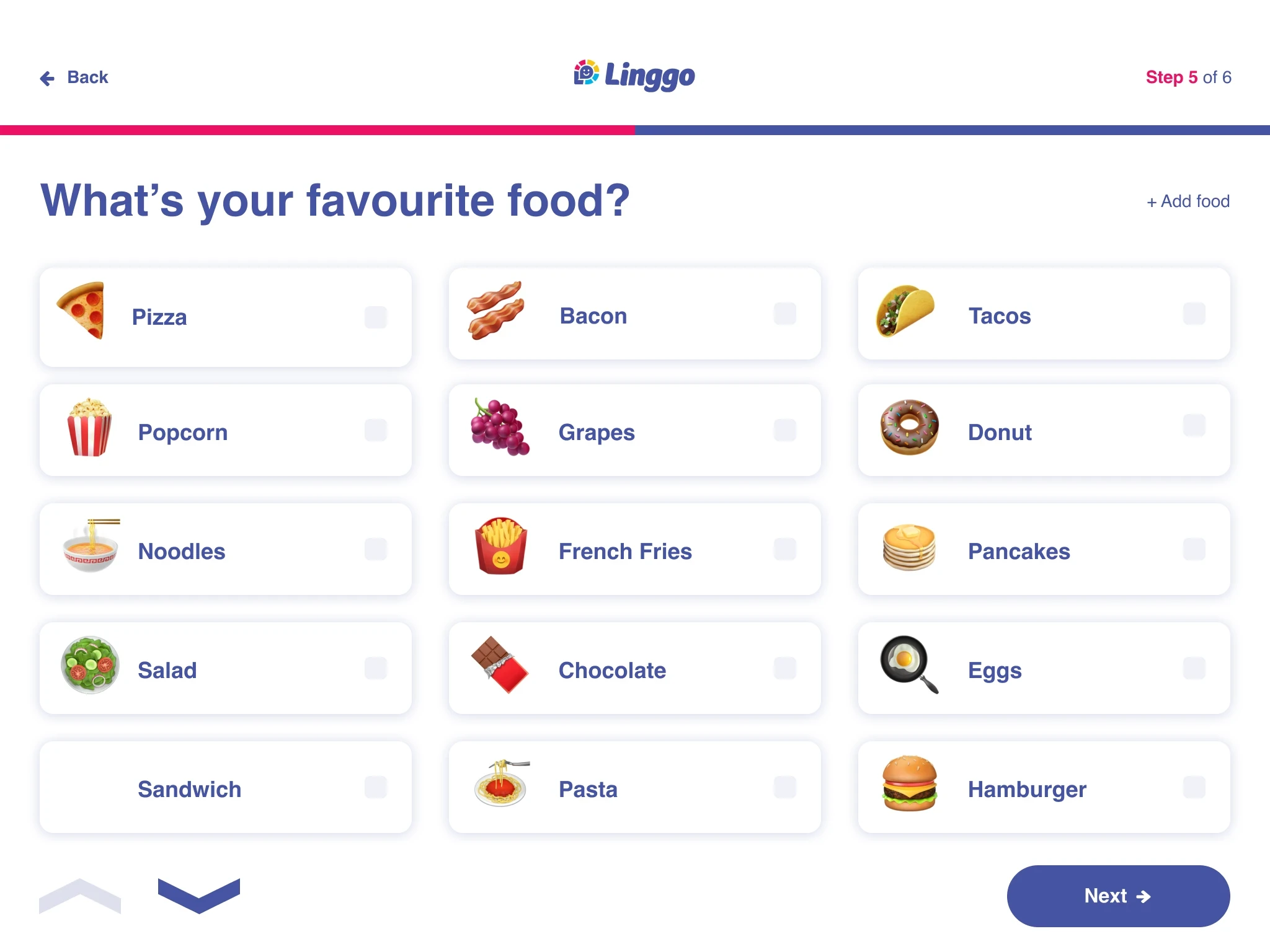
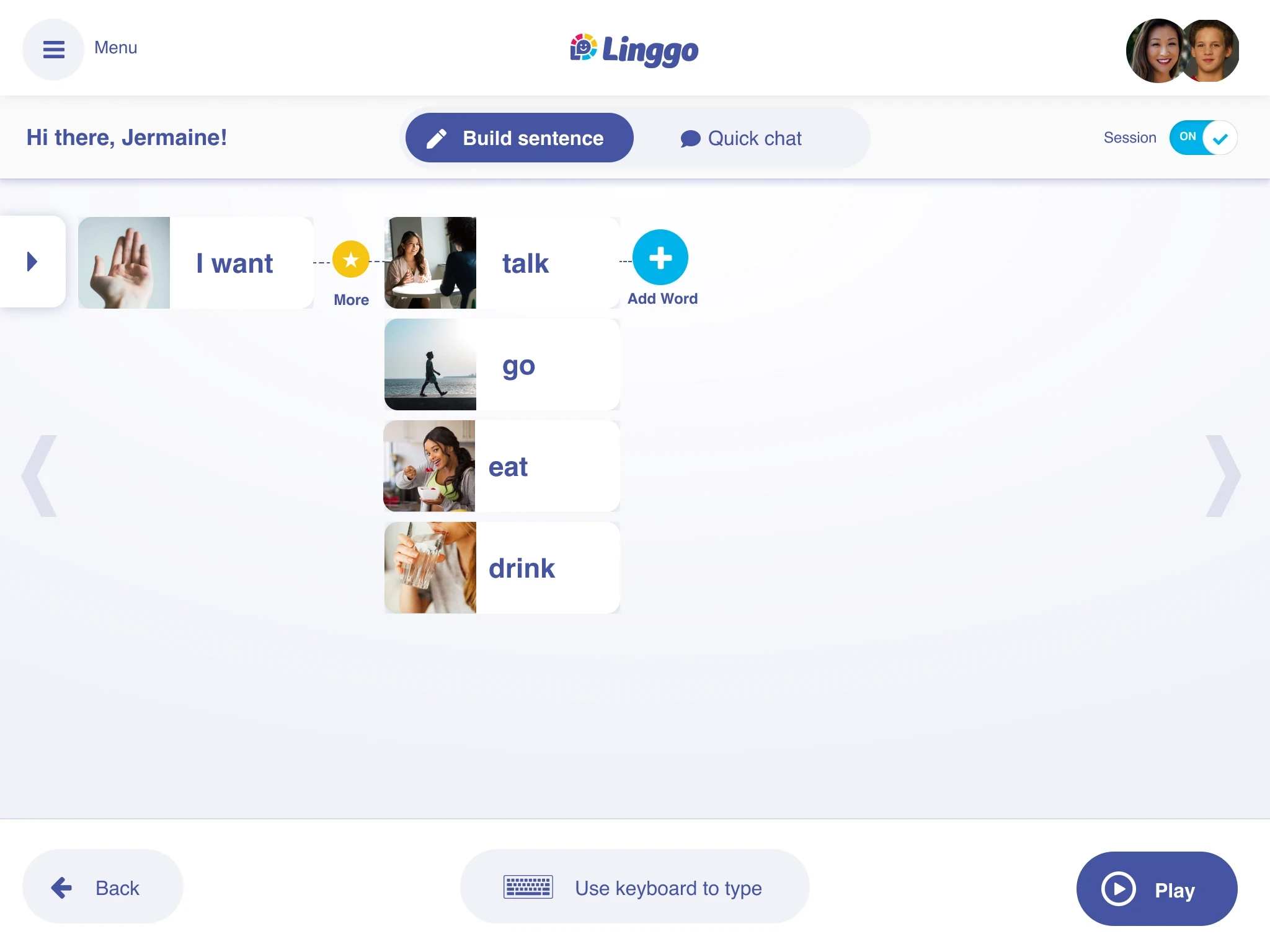
Linggo is delivered through a mobile AAC platform with two iOS applications. The primary app, Linggo Learner, is used by the person with limited speech to express needs, wants, and social messages.
Key differentiating capabilities include:
Dynamic displays: Customizable layouts (Communicator and Free Form) based on schematic “Language Trees” and taxonomic views, designed to reduce cognitive load and make word-finding faster and more intuitive.
Transition to text: A patent-pending mechanism that gradually fades picture symbols over time, helping users build sight-word recognition and move toward literacy without abrupt changes.
Transition to speak: Configurable audio time delays for words and phrases that support vocal modeling and speech development.
Language-building tools: A Builder environment where clinicians and caregivers can configure libraries, categories, structured messages, and core vocabulary to match a learner’s goals and context.
My work centered on Linggo Coach, the companion application for caregivers and clinicians, and on the wider onboarding journeys that connect Linggo.com, insurance flows, and the mobile apps.
I engaged with Linggo from January to October 2023, with an intensive design period from mid-August to late October. The consultancy was asked to focus on the parts of the ecosystem that most directly affect product adoption and perceived value – starting with onboarding and the data workflows that sit behind it.
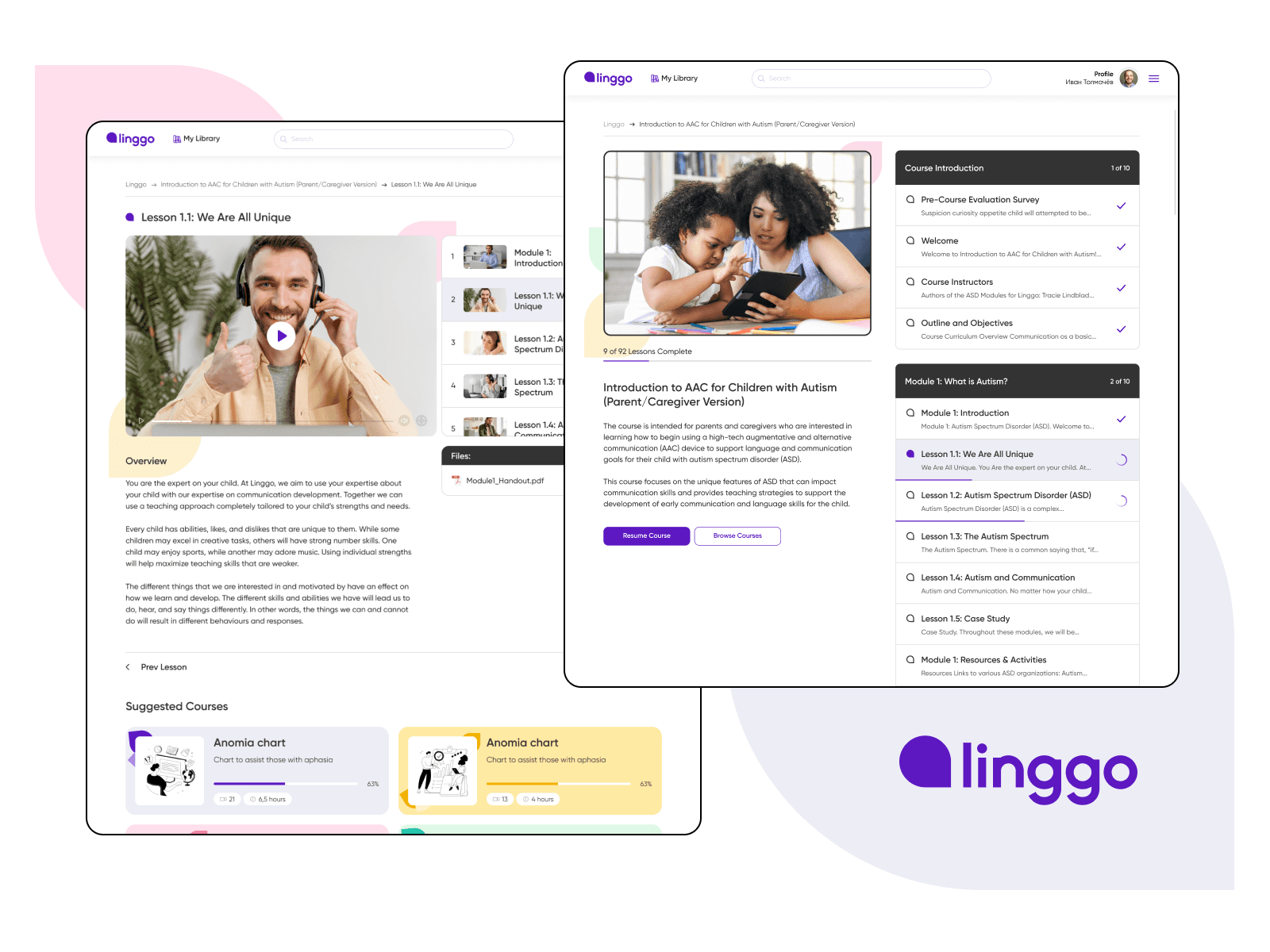
Linggo Coach is the secondary iOS app used by “Coaches”: parents, caregivers, therapists, and other members of a learner’s circle of care. It is intentionally dedicated to data collection and progress monitoring, not vocabulary programming, so the clinical model remains clean and auditable.
At a high level, Coaches:
Create and run communication sessions with one or more learners.
Receive each completed message from the Learner app as a trial in real time.
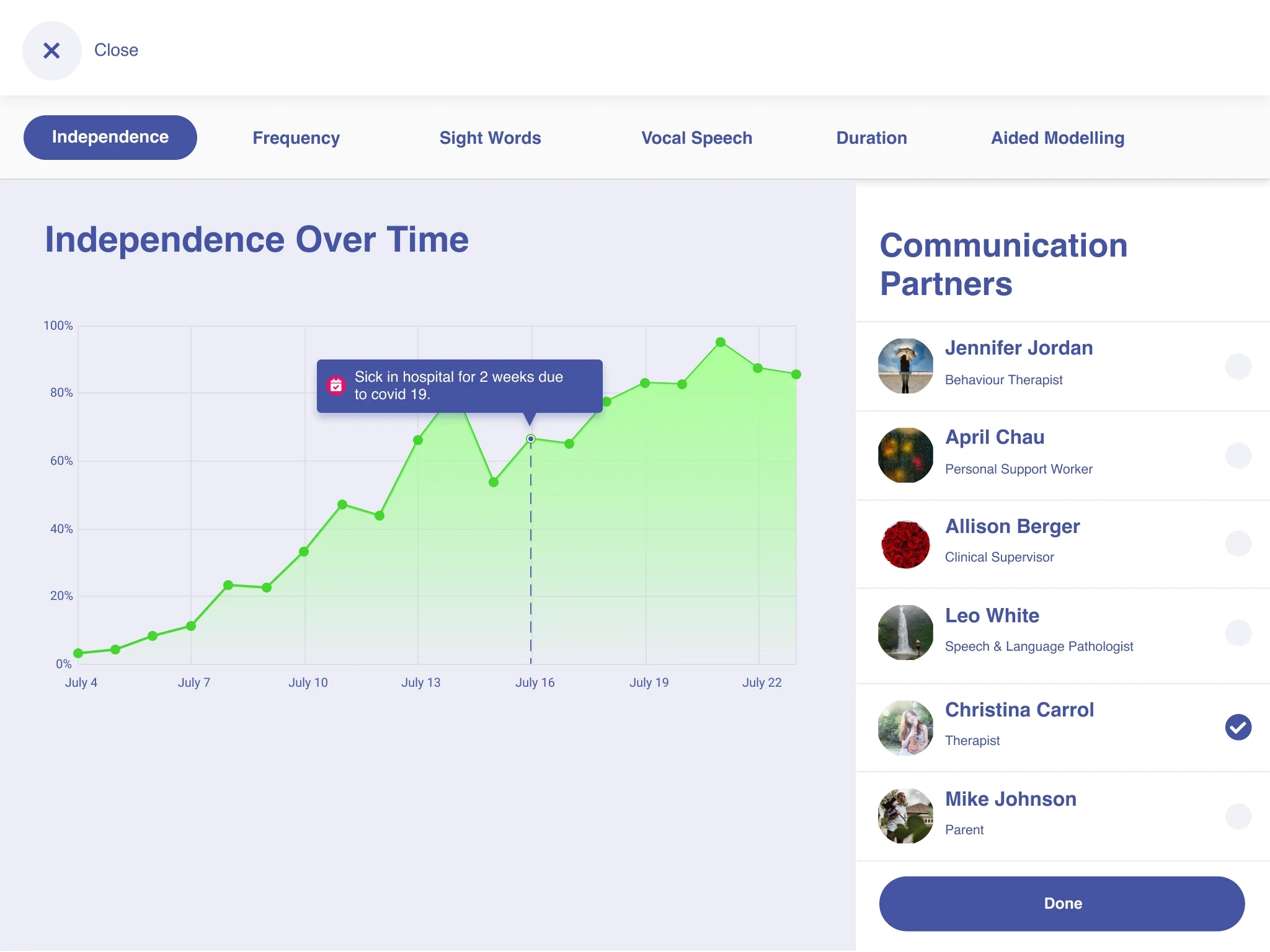
Tag trials with the level of assistance provided (from full physical prompting to fully independent communication).
Optionally track vocal speech quality and context.
Review and export progress views that show independence trends, communication frequency, sight-word mastery, and vocal speech gains over time.
This data becomes the backbone of Linggo’s evidence-based practice story and a key asset in conversations with clinicians, payers, and families.
Onboarding for families and clinicians
I designed a user-centric onboarding experience that would:
Reduce time from account creation to the first meaningful communication success.
Build confidence in Linggo’s clinical foundations.
Lower the cognitive and administrative load on families and providers.
I focused on three primary groups:
Families – often the purchasing decision-makers and day-to-day coordinators.
Healthcare providers – clinical supervisors, behavioral analysts, and speech therapists, many of whom use Linggo - Coach as part of their practice.
Patients – the end-users of Linggo Learner.
The onboarding work covered two main pathways: insurance-assisted account creation and self-service sign-up, each with tailored expectations, information needs, and support moments.
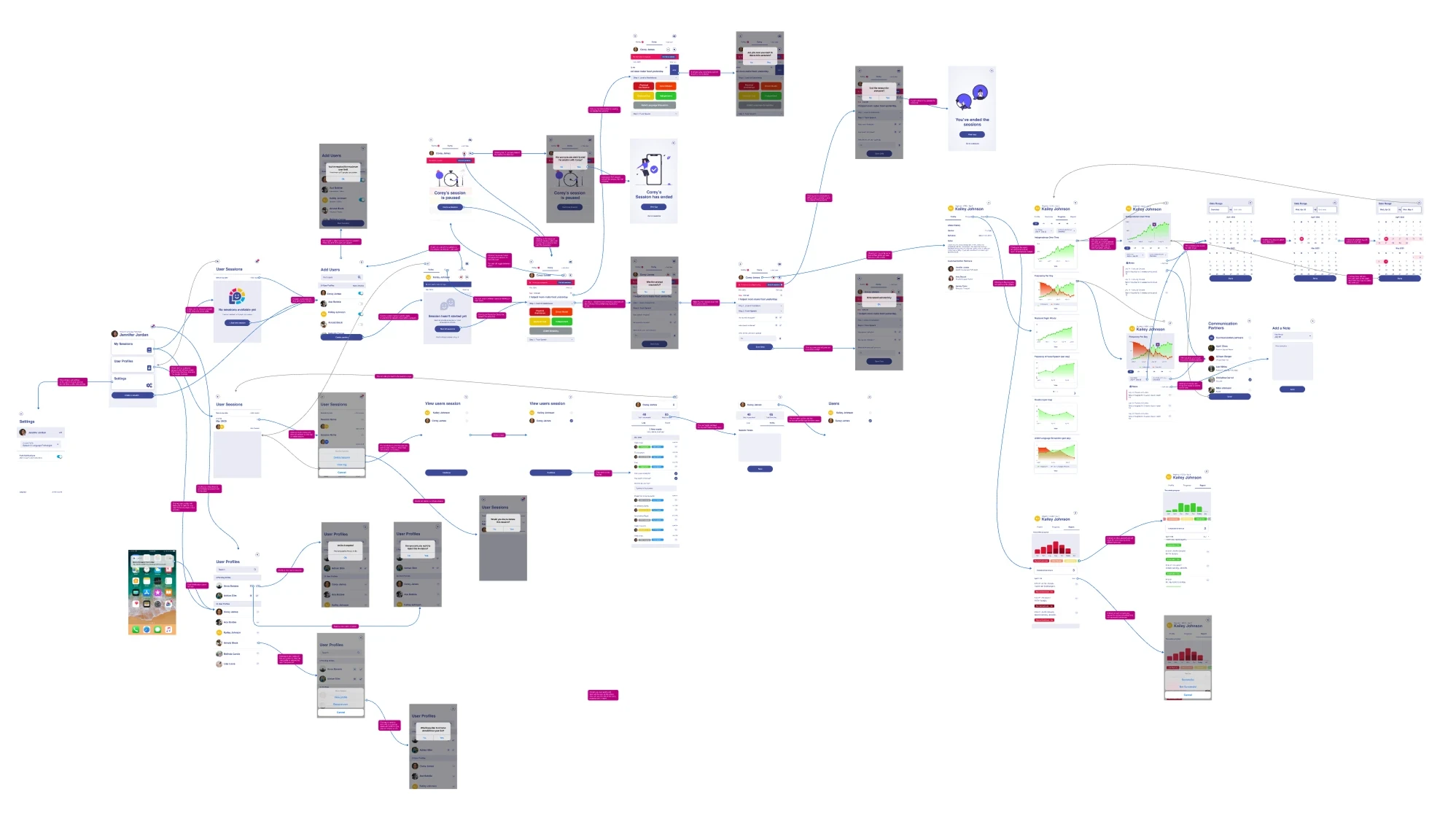
As a consultant, I typically work in three modes: understand the system, pinpoint why it isn’t yet presenting as the best option, then design and validate one that does
Research and analysis
Profiling users and contexts across families, clinicians, and learners.
Mapping the existing onboarding and data flows to identify friction and risk points.
Benchmarking AAC competitors to clarify where Linggo could credibly differentiate.
UX strategy
Defining end-to-end journeys across Linggo.com, insurance flows, and both mobile apps.
Establishing clear activation milestones (e.g., first successful session, first progress review) and the supporting content, UI, and data needed at each step.
Design and prototyping
Producing low-fidelity wireframes and then clickable prototypes for key onboarding and Coach flows.
Iterating with Linggo’s leadership, clinical experts, and engineering to ensure feasibility and alignment with the patented language model.
Validation and delivery
Running usability reviews with Linggo stakeholders and representative users.
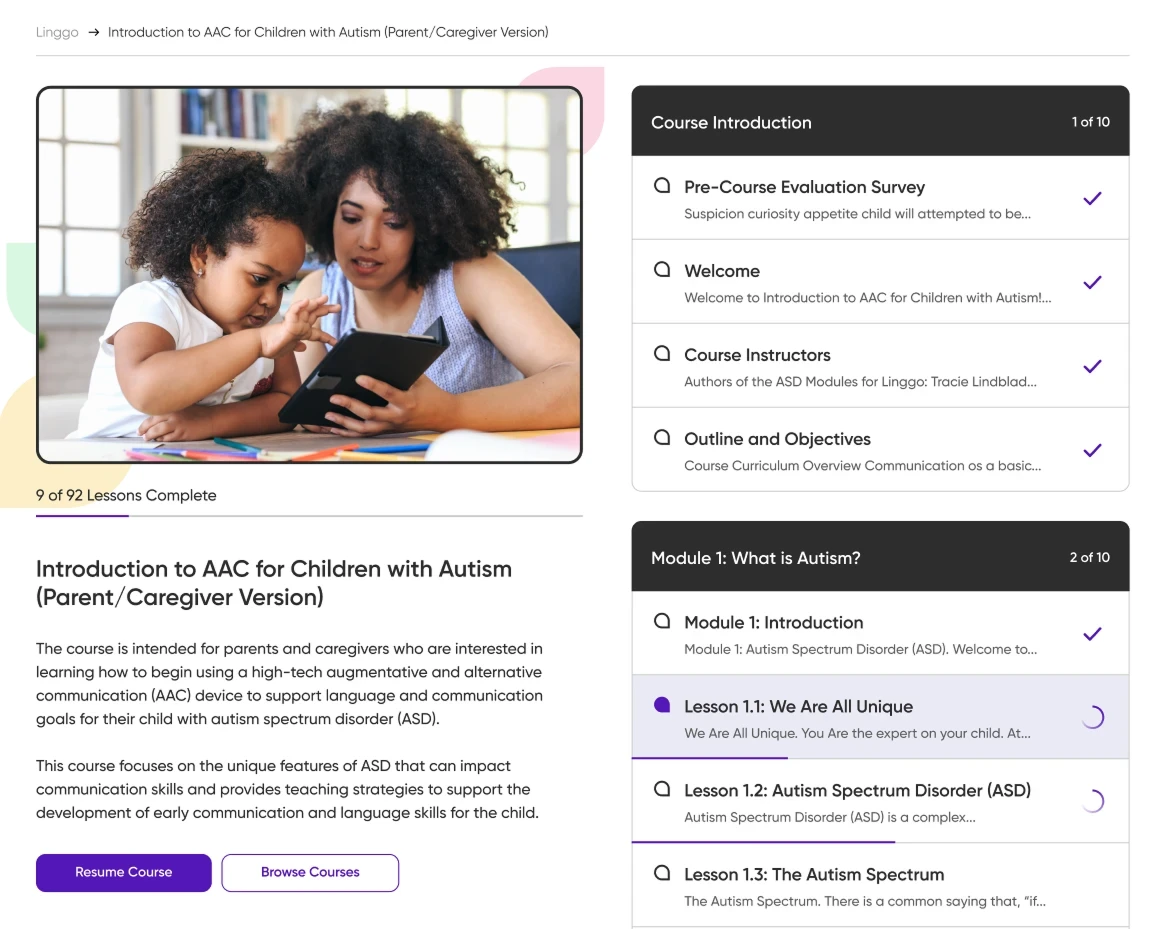
Delivering design systems, flow documentation, and implementation guidance.
Recommending a roadmap of A/B tests and metrics to drive continuous optimisation post-launch.
Collaboration model
I worked as an embedded partner with Linggo’s multidisciplinary team: the CEO and clinical lead (a Board Certified Behavior Analyst), back-end and data science specialists in AI and NLP, and front-end engineering. Regular design reviews ensured that product decisions stayed aligned with clinical efficacy, technical constraints, and market positioning.
We treated the Coach app as the objective lens on whether the AAC “vehicle” is doing its job. My work focused on making that lens easy to look through: a clear story for payers and clinicians, straightforward workflows for caregivers, and data that reliably reflects the learner’s progress.